Hadoop Distributed File System (HDFS)
High-level Architecture
This lesson gives a brief overview of HDFS’s architecture.
1 min read
HDFS architecture
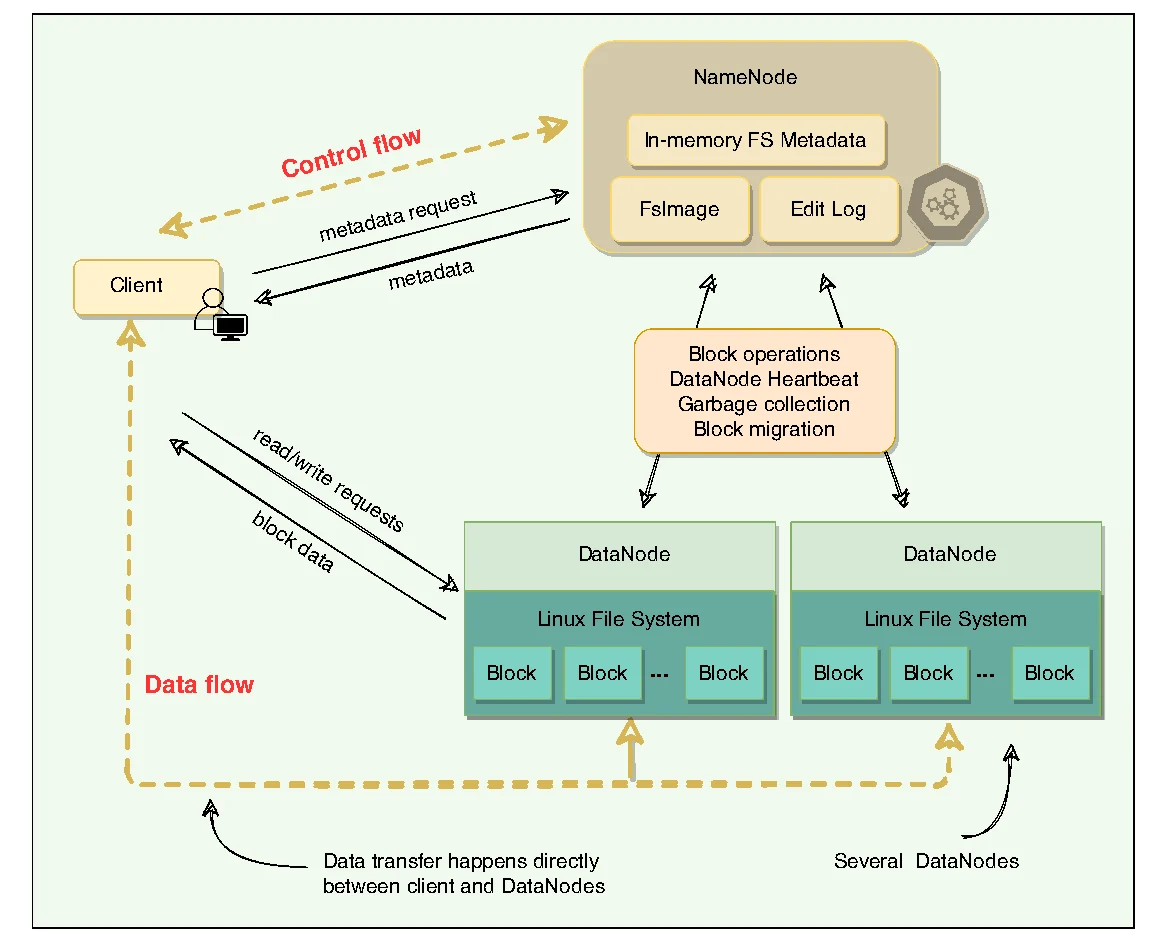
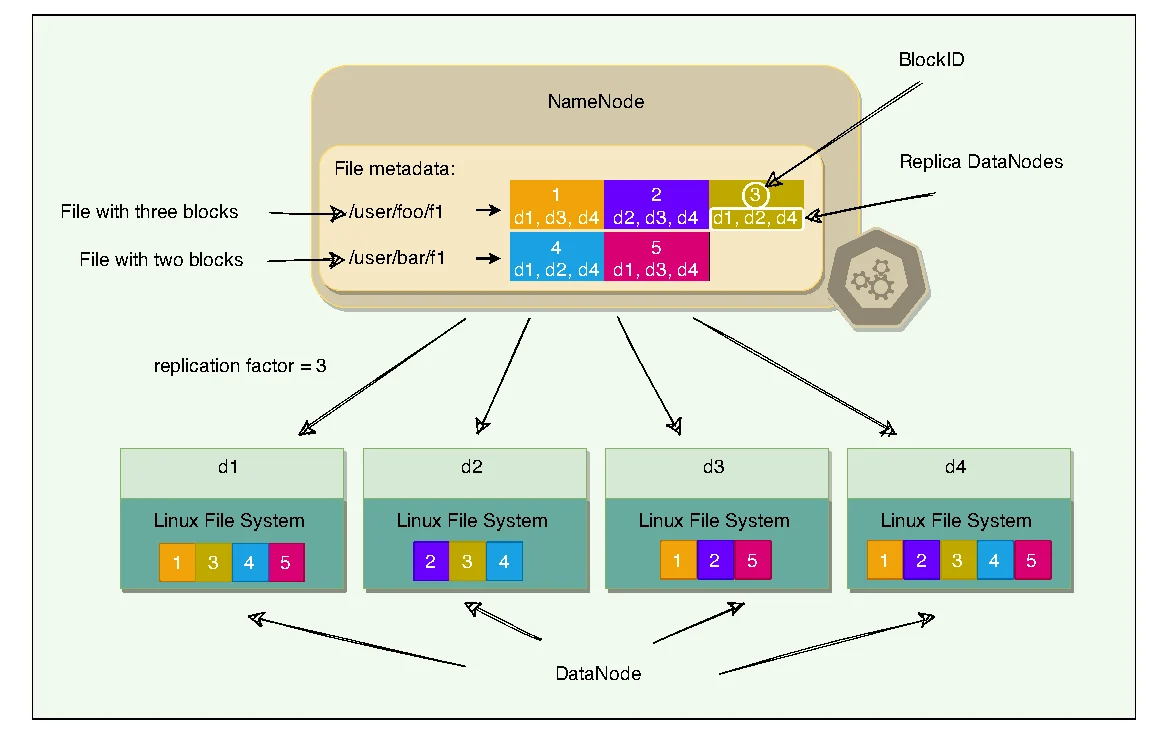
All files stored in HDFS are broken into multiple fixed-size blocks, where each block is 128 megabytes in size by default (configurable on a per-file basis). Each file stored in HDFS consists of two parts: the actual file data and the metadata, i.e., how many block parts the file has, their locations and the total file size, etc. HDFS cluster primarily consists of a NameNode that manages the file system metadata and DataNodes that store the actual data.
- All blocks of a file are of the same size except the last one.
- HDFS uses large block sizes because it is designed to store extremely large files to enable MapReduce jobs to process them efficiently.
- Each block is identified by a unique 64-bit ID called BlockID.
- All read/write operations in HDFS operate at the block level.
- DataNodes store each block in a separate file on the local file system and provide read/write access.
- When a DataNode starts up, it scans through its local file system and sends the list of hosted data blocks (called BlockReport) to the NameNode.
- The NameNode maintains two on-disk data structures to store the file system’s state: an FsImage file and an EditLog. FsImage is a checkpoint of the file system metadata at some point in time, while the EditLog is a log of all of the file system metadata transactions since the image file was last created. These two files help NameNode to recover from failure.
- User applications interact with HDFS through its client. HDFS Client interacts with NameNode for metadata, but all data transfers happen directly between the client and DataNodes.
- To achieve high-availability, HDFS creates multiple copies of the data and distributes them on nodes throughout the cluster.
Comparison between GFS and HDFS
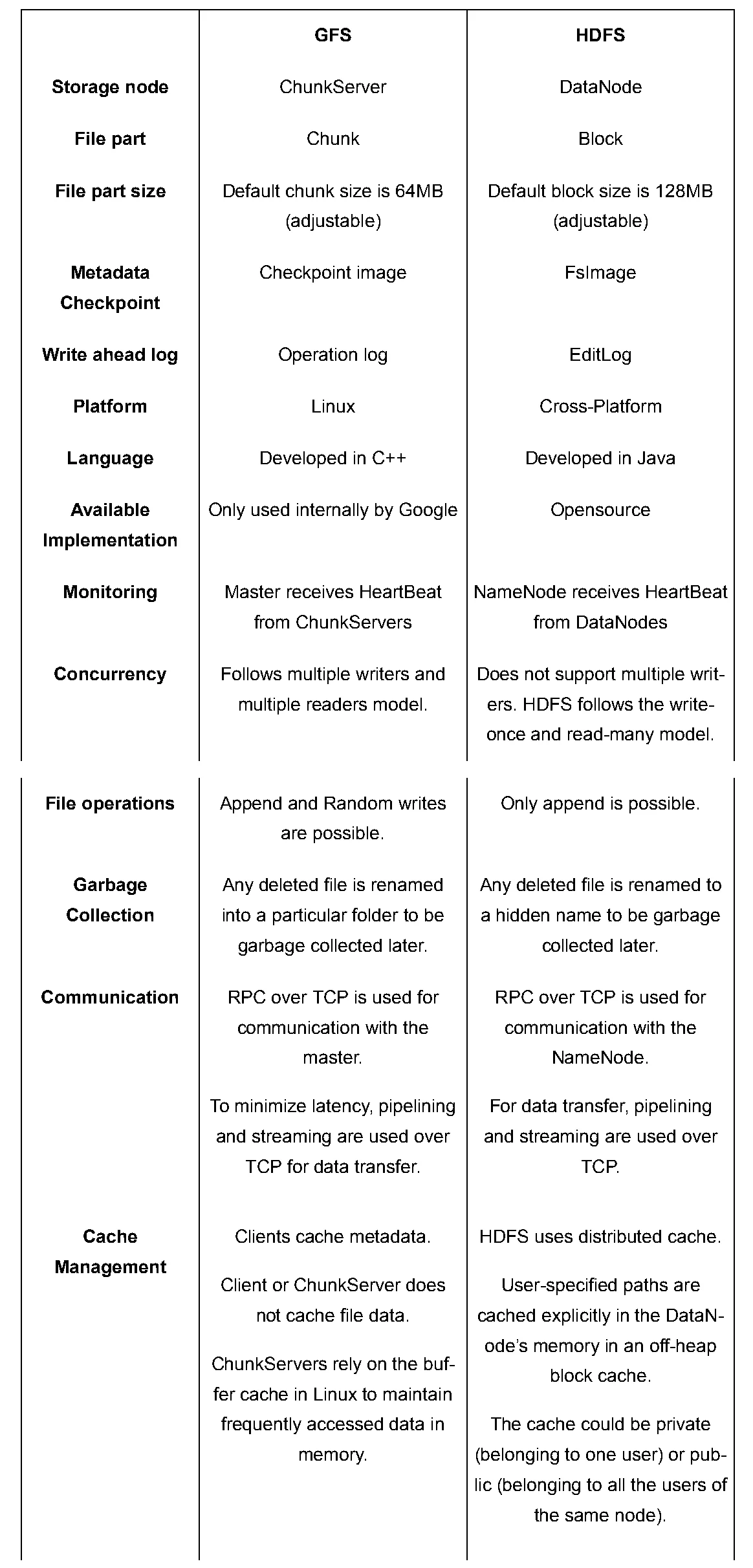
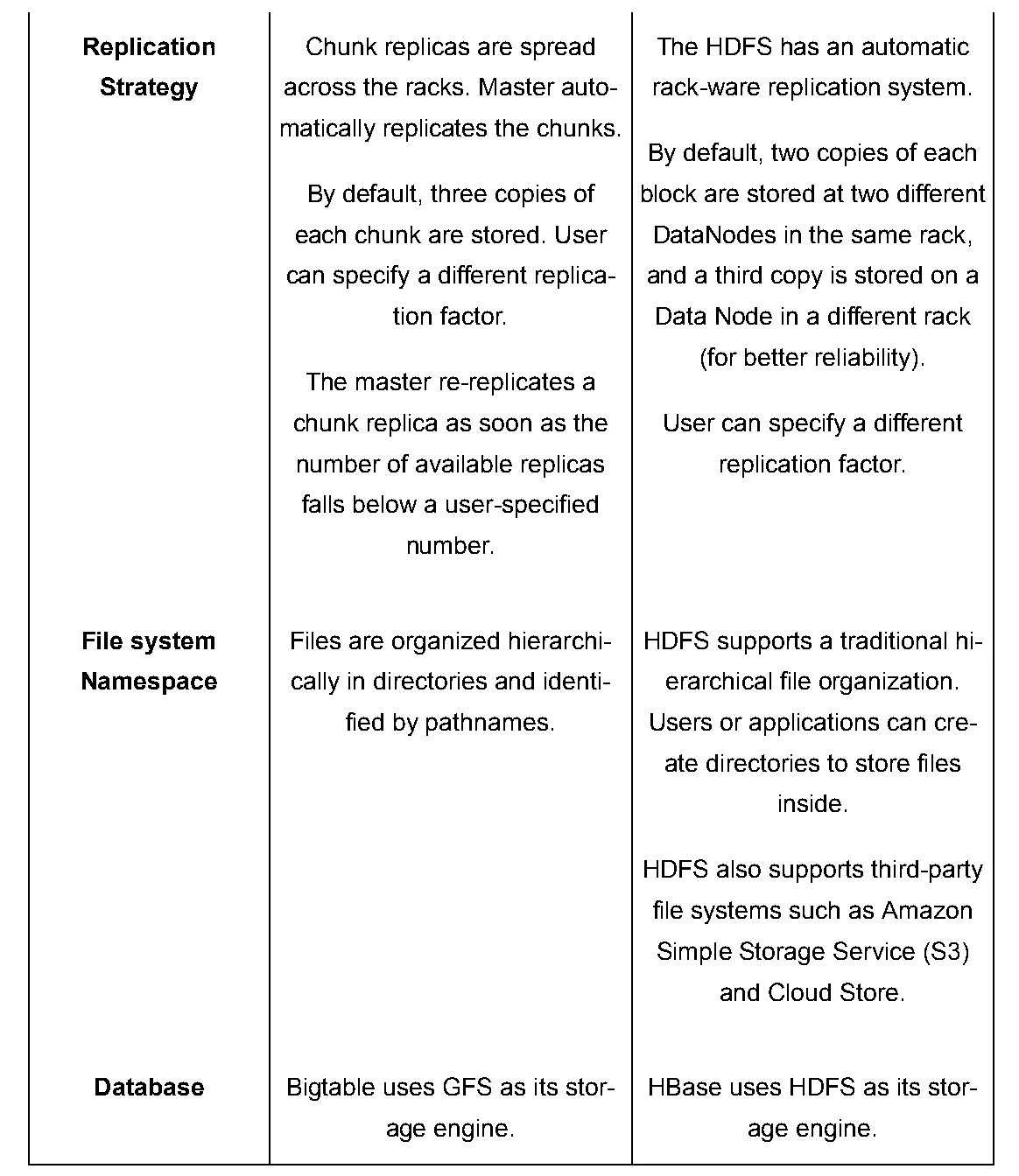
HDFS architecture is similar to GFS, although there are differences in the terminology. Here is the comparison between the two file systems: