BigTable
The Life of BigTable's Read & Write Operations
Let's explore how BigTable handles its read and write operations.
1 min read
Write request
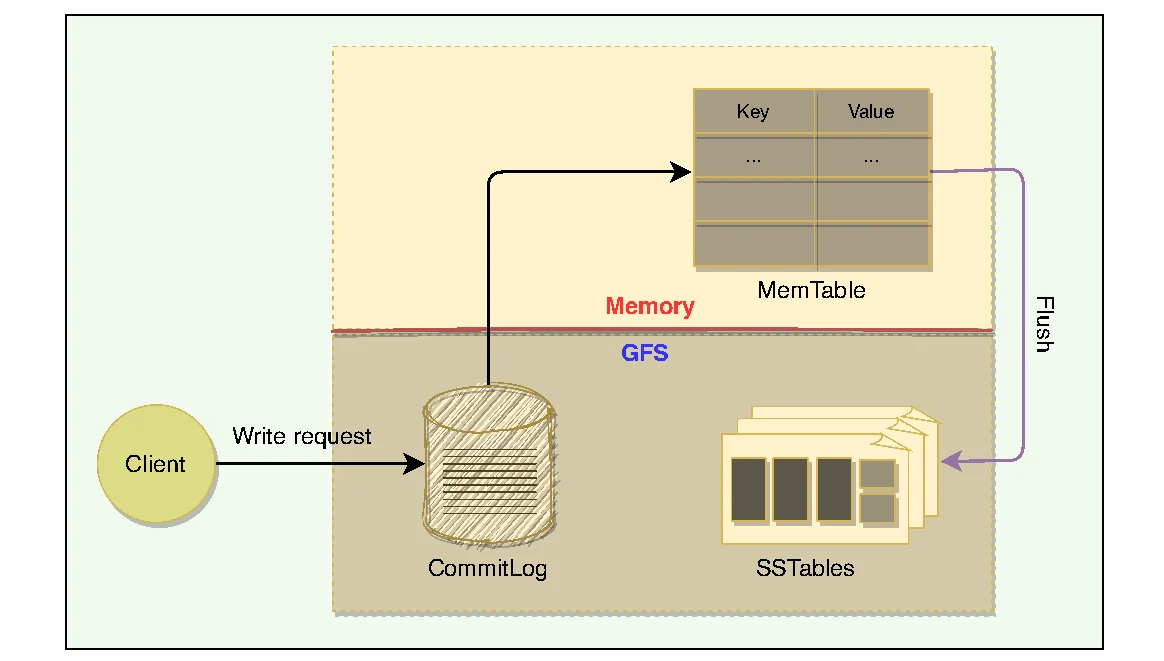
Upon receiving a write request, a Tablet server performs the following set of steps:
- Checks that the request is well-formed.
- Checks that the sender is authorized to perform the mutation. This authorization is performed based on the Access Control Lists (ACLs) that are stored in a chubby file.
- If the above two conditions are met, the mutation is written to the commit-log in GFS that stores redo records.
- Once the mutation is committed to the commit-log, its contents are stored in memory in a sorted buffer called MemTable.
- After inserting the data into the MemTable, acknowledgment is sent to the client that the data has been successfully written.
- Periodically, MemTables are flushed to SSTables, and SSTables are merged during compaction (discussed later).
Read request
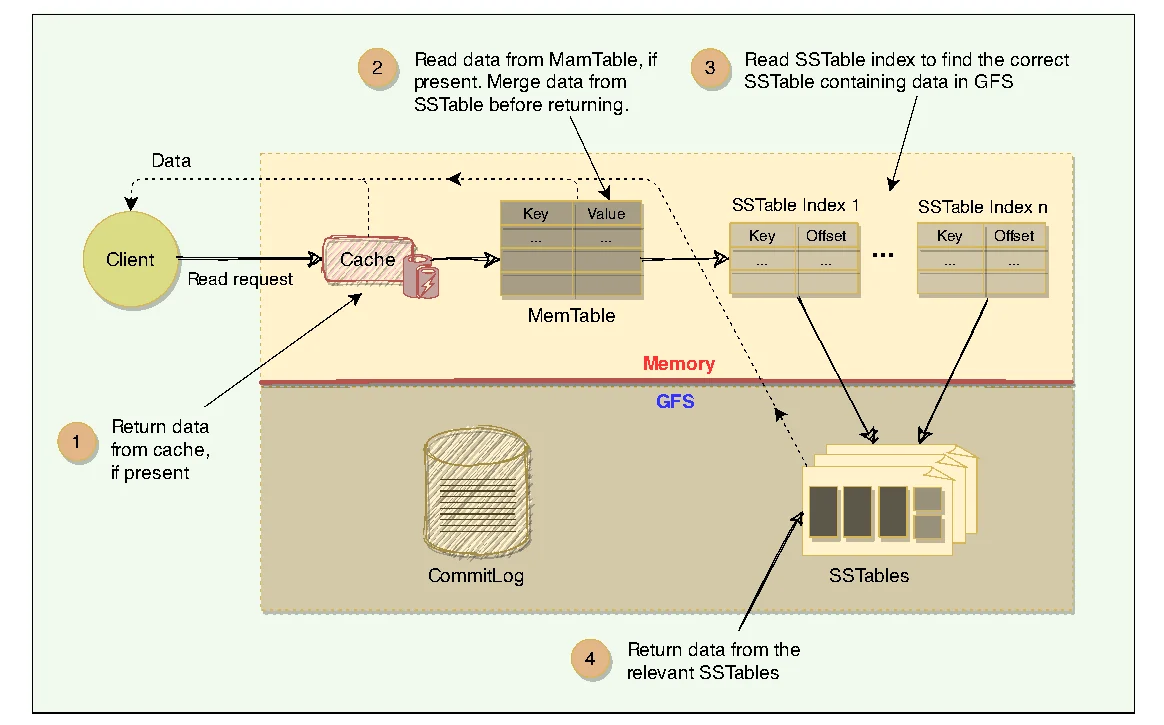
Upon receiving a read request, a Tablet server performs the following set of steps:
- Checks that the request is well-formed and the sender is authorized
- Returns the rows if they are available in the Cache (discussed later)
- Reads MemTable first to find the required rows
- Reads SSTable indexes that are loaded in memory to find SSTables that will have the required data, then reads the rows from those SSTables
- Merge rows read from MemTable and SSTables to find the required version of the data. Since the SSTables and the MemTable are sorted, the merged view can be formed efficiently.